




Overhand Grip Barbell Row Tips for Perfect Form and Gains in 2026
While mobile phones undoubtedly provide countless benefits and conveniences, their excessive brings with it.

Can a single tweak to setup unlock bigger pulls and a thicker back? Many lifters miss simple cues that limit strength and size gains.
Table Of Content
- Key Takeaways
- Understanding the Overhand Grip Barbell Row
- Anatomy and Muscle Engagement
- Essential Equipment and Setup
- Mastering the Overhand Grip Barbell Row Technique
- The Hip Hinge Position
- Pulling Mechanics
- The Controlled Eccentric
- Comparing Grip Variations for Back Development
- Programming for Strength and Hypertrophy
- Rep Ranges for Specific Goals
- Common Form Mistakes to Avoid
- Integrating Complementary Pulling Exercises
- Vertical Pulling Movements
- Horizontal Row Alternatives
- Safety Considerations for Lower Back Health
- Conclusion
- FAQ
- What is the primary benefit of the overhand grip barbell row?
- How should someone set up equipment and foot placement?
- What is the correct hip hinge position for this exercise?
- How should the pulling mechanics be performed to avoid injury?
- What is the role of the controlled eccentric phase?
- How do grip variations affect muscle emphasis?
- What rep ranges work best for strength versus hypertrophy?
- What common form mistakes should be avoided?
- Which complementary pulling exercises pair well with this movement?
- How can someone protect the lower back while performing heavy sets?
The barbell bent-over row is a cornerstone back exercise that targets the entire posterior chain. Mastering the overhand grip barbell row helps build a wider, denser back while improving pulling strength.

This foundational movement demands precise form so the bar moves safely through the full range. A proper setup positions the bar and body before the first rep.
When executed correctly, the technique offsets desk-induced forward shoulders and equips lifters to handle more weight. Whether a beginner or seasoned athlete in Canada, this overhand barbell approach offers a reliable path to stronger pulls and better posture.
Key Takeaways
- Small setup changes yield big gains in back development.
- Focus on posture and bar path to protect the lower back.
- Consistent practice builds the pulling power for heavier lifts.
- Proper bar position prevents common posture issues from desk work.
- Both beginners and advanced lifters benefit from disciplined technique.
Understanding the Overhand Grip Barbell Row
Maintaining a 45° torso tilt with a firm base is the simple setup that unlocks better back engagement.
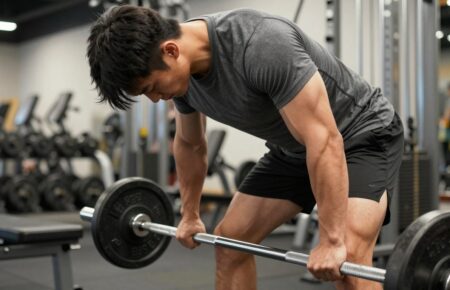
The barbell row is a compound exercise performed from a hinged position. Lifters typically set the torso near a 45° angle to target the mid and upper back effectively.
Feet should sit slightly more than hip-width apart on the floor to create a stable base. Proper hips placement helps keep the spine neutral and reduces lower back strain during each repetition.
Using an overhand grip variation shifts emphasis toward the upper back and away from the arms. Keeping the bar close to the legs minimizes torque on the lower spine and improves the bar path.
At the top of the movement, a controlled squeeze of the shoulder blades confirms mid-back activation. With consistent training, barbell rows build a stronger, more resilient back that supports heavier compound lifts.
Focus on setup, torso angle, and a tight top squeeze to get the most from this movement.
Anatomy and Muscle Engagement
Knowing which muscles fire during each pull helps lifters target weak links and train more efficiently.
Lats are the prime movers in this exercise. They drive shoulder extension and create the width that defines a powerful back. The lats work with the traps and rhomboids to retract and stabilize the scapula.
The biceps and forearms assist by controlling elbow flexion so the tension stays on the back rather than the arms. Engaging the rear delts helps bring the elbows back and improves upper back recruitment.
Posterior chain activation is essential. The spinal erectors, glutes, and hamstrings hold the hinged position isometrically to protect the lower spine and keep the body stable under load.
“Proper shoulder mechanics let the lats function optimally without extra strain on the joints.”
- The lats drive the pull and deliver width.
- Traps and rhomboids stabilize the scapula for safe posture.
- Posterior chain muscles brace the torso during each rep.
Essential Equipment and Setup
Set the loaded bar on the stand and step so your ankles sit directly under the bar before you hinge.
Put a loaded barbell on the floor stand with feet slightly more than hip-width apart. This stance creates a stable base to support the weight and keeps the bar centered over the mid-foot.
Proper foot placement matters. Plant the feet so ankles are under the bar. That alignment gives the correct leverage for each pull and reduces strain on the lower back.
- Keep a firm overhand grip on the bar to control heavy loads and protect the back.
- Maintain a neutral spine in the hinged position to preserve lower back health.
- Use a standard bar for steady progression; add small weight increments as strength improves.
- Confirm the grip barbell alignment is symmetrical to avoid muscle imbalances.
These setup steps ensure the overhand barbell position keeps the bar path vertical and the focus on back development during each row.
Mastering the Overhand Grip Barbell Row Technique
The lift begins at the hips: push them back until the torso is braced and the spine neutral.
The Hip Hinge Position
Set the hips back and keep the back flat. This position creates a stable base for the movement.
Hips and hamstrings hold the body while the upper back prepares to pull.
Pulling Mechanics
Drive the elbows toward the ceiling so the lats and upper back do the work. Pull the bar between the navel and sternum, pause for a second at the top, and force a tight squeeze.
Aim for a straight bar path from the floor to the lower chest and avoid using momentum to heave the weight up.
The Controlled Eccentric
Lower the bar slowly to increase time under tension. Control on the way down protects the shoulder and trains the back muscles more effectively.
Aim for 8–12 reps per set, keeping each rep deliberate and steady.
“Pause at the top to challenge stabilizers and build denser back muscle.”

| Phase | Key Cue | Goal |
|---|---|---|
| Setup / Hinge | Hips back, spine neutral | Stable base, protect lower back |
| Pull | Elbows up, bar to lower chest | Lats & upper back activation |
| Eccentric | Slow descent, 2–3 seconds | Increase tension, safer shoulders |
Comparing Grip Variations for Back Development
Choosing a hand position changes which back muscles take the lead during each pull.
Underhand variations bring the biceps and lower lats more into play. Keeping the elbows close to the torso helps the lats shorten and thicken. Lifters often use an underhand barbell for maximum lat emphasis and a slightly different elbow path.
Overhand options shift emphasis toward the upper back, hitting the rhomboids and rear delts more than the biceps. This makes the movement useful for posture work and upper-row density.
Using a cable setup gives a cleaner constant tension, but the barbell still builds raw pulling strength. When switching to an underhand position, expect to move more weight and watch for extra biceps strain.
“Elbow position relative to the torso is the simplest way to change what the back feels.”
| Variation | Main Emphasis | Practical Tip |
|---|---|---|
| Underhand barbell | Lats, biceps | Keep elbows tight; control descent |
| Overhand barbell | Upper back, rhomboids, rear delts | Retract scapula at the top; avoid yanking |
| Cable row | Constant tension, mid-back | Use neutral handle to vary elbow path |
- Choose based on goals: lat thickness or upper-back density.
- Alternate variations to build a balanced back.
Programming for Strength and Hypertrophy
Programming the pulling movement with intention lets athletes target strength, size, or endurance more efficiently.
Choose rep ranges that match the goal. For pure strength, use low reps and heavier weight. For muscle growth, select moderate reps and controlled tempo.
Rep Ranges for Specific Goals
Guidelines:
- Strength: 4–6 reps per set. Focus on moving heavier loads with strict form to build a powerful back.
- Hypertrophy: 8–12 reps per set. This range creates volume to stimulate the lats, traps, and surrounding muscles.
- Endurance: 15+ reps. Use lighter weight to boost work capacity and maintain form in longer sets.
Progressive overload is the key. Aim to add weight or extra reps each week to ensure steady gains.
“Consistent programming and controlled movement ensure the target muscle gets trained, not just the bar.”
Vary the grip and variations across cycles to shift emphasis and avoid plateaus. Track sets, reps, and weight to measure progress and adjust training for Canadian lifters and others seeking reliable results.
Common Form Mistakes to Avoid
Small technical faults on each rep quietly add up to stalled progress and a higher risk of injury.
Rounding the lower back is a frequent error. Keep the chest tall and the spine neutral to protect the lower back and keep tension on the intended muscles.
Using too much weight leads to momentum. When the body rocks, the back does less work and the set becomes less effective.
Letting the shoulders roll forward at the top reduces upper back activation. A controlled scapular retraction keeps the lats and upper body working.
Failing to keep the elbows close to the body can stress the shoulder joint. With an overhand barbell setup, elbow tracking matters for safe pulls.
If the torso rocks or thrusts, lower the load and tighten the hips and core. Every rep in a set should be deliberate and strict.
“Prioritize form over heavier weight; the correct position builds durable strength and better muscle development.”
Integrating Complementary Pulling Exercises
Balanced back training blends movements that pull from top-to-bottom and front-to-back for full development.

Vertical Pulling Movements
Vertical work builds the width of the lats and aids posture. For many lifters in Canada and beyond, pull-ups remain a high bar. Still, about 70% of men cannot do a strict pull-up, so lat pulldowns and assisted pull-up variations are vital.
Lat pulldowns let the athlete load the movement and practice proper shoulder mechanics. Use assisted machines, bands, or negatives to progress toward full pull-ups.
Horizontal Row Alternatives
Horizontal pulls complement vertical work and fix imbalances. The underhand barbell row has merit, but single-arm dumbbell rows and cable rows help correct side-to-side differences.
Using a cable after heavy barbell rows keeps constant tension on the lats and rear delts. Focus on elbow tracking and a solid top squeeze to recruit rhomboids and minimize shoulder strain.
“Mix vertical and horizontal exercises to target all the major back muscles and protect the shoulders.”
Safety Considerations for Lower Back Health
Protecting the lower spine should be the top priority whenever someone adds load to a hinged pulling movement.
Maintain a slight arch and avoid rounding the spine. A neutral position keeps the spinal erectors working safely and directs tension to the intended back muscles. If the erectors tire before the lats, they will fail first.
If the spinal erectors fatigue before the lats, stop the set. Continuing risks strain and possible injury. Reduce weight, reset the position from the floor, or switch to a safer alternative.
Use chest-supported machines or a cable-supported row when the lower back limits training. These options let the lats and upper back work without forcing the hips or lower spine to hold heavy loads.
- Always warm up the back and hips before heavy sets.
- Train the core consistently to stabilize the body during each set.
- Stop immediately if lower back pain occurs and reassess form or reduce weight.
“Safety is the foundation of long-term progress; never sacrifice form for heavier weight.”
Conclusion
Wrapping up, the best gains come from steady practice and smart progression across pulling exercises.
The overhand barbell is a foundational exercise that builds a thick, strong back by targeting the lats, rhomboids, and rear delts. Mixing grip variations, including the underhand barbell row and underhand grip options, ensures balanced muscle development.
Prioritize clean technique, controlled tempo, and safe hip positioning to protect the lower spine and engage the right muscles on every rep.
Combine horizontal pulls with vertical work like pull-downs or cable variations, keep training consistent, and apply progressive overload. Now it is time to use these tips and start building a more powerful, aesthetic back from the floor to the top of each set.
FAQ
What is the primary benefit of the overhand grip barbell row?
The overhand variation emphasizes the upper back, including the trapezius, rhomboids, and rear deltoids, while also engaging the lats and lower back for stability. It helps improve posture and horizontal pulling strength, making it useful for balanced back development and better pulling mechanics in other lifts.
How should someone set up equipment and foot placement?
Set feet about hip-width apart with a slight bend in the knees. The torso should hinge forward from the hips until it is roughly parallel to the floor, keeping the spine neutral. Use a straight bar and collars for safety, and position hands so elbows can track close to the body during the pull to protect the shoulders and target the intended muscles.
What is the correct hip hinge position for this exercise?
The hip hinge starts by pushing the hips back while maintaining a flat back and braced core. The movement originates at the hips, not the lower back. This position preserves spinal alignment and places tension on the posterior chain so the upper back can do the majority of the pulling work.
How should the pulling mechanics be performed to avoid injury?
Drive the elbows back and squeeze the shoulder blades toward the spine while keeping the torso stable. Avoid excessive torso rotation or using momentum. Controlled reps with a full squeeze at the top ensure the rhomboids and traps receive maximal stimulus without overloading the lumbar spine.
What is the role of the controlled eccentric phase?
A slow, controlled lowering phase increases time under tension and promotes muscle growth. It also reduces stress on joints and improves technique by reinforcing proper shoulder and scapular positioning. Generally, a 2-3 second descent is effective for hypertrophy and strength gains.
How do grip variations affect muscle emphasis?
Different hand positions change which muscles work hardest. A supinated (underhand) hand position shifts load to the biceps and lower lats, while a pronated variant stresses the upper back and rear delts more. Varying grips across training cycles helps ensure balanced development across all back muscle groups.
What rep ranges work best for strength versus hypertrophy?
For strength, use lower reps (3–6) with heavier weight and longer rest. For hypertrophy, aim for moderate reps (8–12) with controlled tempo and shorter rest. Mixing both approaches across weeks or months gives the best long-term results for both size and pulling power.
What common form mistakes should be avoided?
Avoid rounding the lower back, excessive torso swing, flaring elbows, and jerking the weight upward. These faults reduce effectiveness and increase injury risk. Keep the spine neutral, use controlled motion, and maintain proper breathing to preserve core stability.
Which complementary pulling exercises pair well with this movement?
Vertical pulls like pull-ups and lat pulldowns complement horizontal pulls by targeting the lats from a different angle. Cable rows, single-arm dumbbell rows, and chest-supported variations provide alternatives that help correct muscle imbalances and reduce lumbar stress.
How can someone protect the lower back while performing heavy sets?
Maintain a braced core, avoid excessive forward lean, and consider using a belt for near-maximal loads. Reduce range or switch to chest-supported variations if lower back fatigue becomes limiting. Progressive overload structured across sets and sessions minimizes risk of strain.







No Comment! Be the first one.