


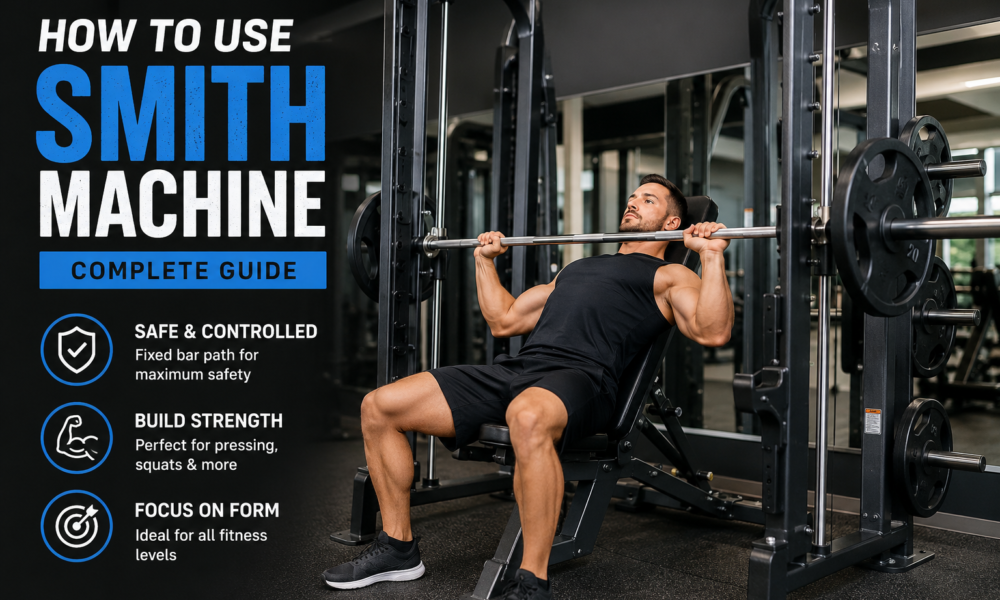
Building a home gym with the right equipment transforms your fitness journey. A smith machine offers one of the most versatile strength training solutions available today.
Table Of Content
- Ready to Build Your Home Gym?
- Why Choose a Smith Machine for Your Home Gym
- Key Advantages of Home Gym Smith Machines
- Safety and Control
- Versatility and Efficiency
- Smith Machine Training vs Free Weights
- Smith Machine Benefits
- Considerations
- Top 3 Smith Machines for Home in 2026
- Product #1: Premium Multi-Function Smith Machine System
- Core Features and Design
- Functional Trainer Integration
- Additional Training Features
- Technical Specifications
- Advantages
- Considerations
- User Experience Summary
- Product #2: Best Value Smith Machine with Power Rack
- 🏆 Editor’s Choice for 2026
- Dual Training Functionality
- Training Station Features
- Space and Setup Considerations
- Technical Specifications
- Advantages
- Considerations
- User Feedback Analysis
- Product #3: Compact Smith Machine for Limited Spaces
- Space-Optimized Design
- Essential Features and Functionality
- Training Applications
- Technical Specifications
- Advantages
- Considerations
- Owner Experience Reports
- Side-by-Side Smith Machine Comparison
- Found Your Perfect Match?
- Key Specification Insights
- Bar Path Considerations
- Feature Integration Value
- Complete Smith Machine Buying Guide
- Space Planning and Requirements
- Critical Measurements
- Frame Construction and Materials
- Gauge Comparison
- Weight Capacity Considerations
- Bar Path Types and Biomechanics
- Choosing Between Path Types
- Safety Features and Systems
- Essential Safety Elements
- Additional Features and Accessories
- Cable Systems and Functional Trainers
- Pull-Up Bar Stations
- Weight Plate Storage
- Assembly and Installation Considerations
- Installation Best Practices
- Maintenance and Longevity
- Routine Maintenance Schedule
- Budget and Value Assessment
- Budget-Conscious Priorities
- Investment-Focused Priorities
- Ready to Make Your Decision?
- Maximizing Your Smith Machine Training
- Essential Smith Machine Exercises
- Lower Body Movements
- Upper Body Pressing
- Rowing and Pulling
- Exercise Programming Strategies
- Smith Machine Advantages
- Free Weight Advantages
- Sample Smith Machine Workout Routine
- Progressive Overload Techniques
- Weight Progression
- Volume Progression
- Intensity Techniques
- Common Form Mistakes and Corrections
- Squat Form Issues
- Pressing Form Issues
- Integrating Accessory Work
- Long-Term Care and Maintenance
- Daily and Weekly Care
- Weekly Maintenance Checklist
- Monthly and Quarterly Procedures
- Troubleshooting Common Issues
- Sticky or Rough Bar Movement
- Unusual Noises During Use
- Uneven Bar Travel
- Extending Equipment Lifespan
- Usage Best Practices
- When to Seek Professional Service
- Professional Service Indicators
- Build Your Home Gym Today
- Frequently Asked Questions
- Are smith machines good for building muscle at home?
- How much space do I need for a home gym smith machine?
- Can beginners use smith machines safely?
- Should I choose vertical or angled bar path?
- What weight capacity do I need?
- Do I need additional equipment with a smith machine?
- How long does assembly take?
- Are smith machines better than power racks?
- How much maintenance do smith machines require?
- Can I train my entire body with one smith machine?
- What is the difference between 11-gauge and 12-gauge steel?
- Should I buy used or new smith machine equipment?
- Final Recommendations and Next Steps
- Our Top Pick: Best Value Hybrid Model
- 🏆 Start Building Strength Today
- Alternative Recommendations by Use Case
- For Complete Training Versatility
- For Limited Space
- For Maximum Value
- Implementation Timeline
- Essential Complementary Purchases
- Long-Term Success Factors
- Training Consistency
- Equipment Care
- Making Your Final Decision
- Choose Your Perfect Smith Machine
These machines provide fixed bar path stability for safer workouts. They support multiple exercises from squats to bench presses.
This comprehensive guide compares the three best smith machines for home use in 2026. You’ll discover detailed specifications, real user ratings, and expert insights to make an informed decision.
Whether you’re a beginner or experienced lifter, the right smith machine creates a foundation for serious strength training. Let’s explore which option matches your space, budget, and fitness goals.
Ready to Build Your Home Gym?
Compare our top three smith machine recommendations and find your perfect match.
Why Choose a Smith Machine for Your Home Gym

Smith machines dominate home gym equipment choices for specific reasons. The fixed bar path guides your movements along a predetermined vertical or slightly angled track.
This design offers multiple advantages. You can train alone without requiring a spotter for heavy lifts. The built-in safety catches prevent accidents during challenging sets.
Safety features matter tremendously when working out at home. Smith bars lock at any height along the track. You simply rotate your wrists to engage the safety mechanism.
Key Advantages of Home Gym Smith Machines
Safety and Control
The fixed bar path eliminates balance concerns during lifts. Safety spotter arms catch the weight if you reach failure. This protection proves invaluable when training without a partner.
- Built-in safety catches at multiple heights
- No risk of bar tipping or falling
- Confidence to push limits safely
- Reduced injury risk for beginners
Versatility and Efficiency
One smith machine offers countless exercise options. From compound movements to isolation work, you target specific muscle groups effectively without multiple equipment pieces.
- Squat variations and leg exercises
- Upper body pressing movements
- Rowing and pulling exercises
- Core strengthening routines
Smith Machine Training vs Free Weights
Understanding the differences helps you maximize results. Free weights require stabilizer muscles to control the bar’s path. Smith machine training isolates target muscles more directly.
Each approach offers benefits. Free weights develop functional strength and coordination. Smith machines allow heavier loads with reduced injury risk.

Many serious lifters use both tools strategically. The fixed bar path proves especially valuable for specific muscle groups. Leg exercises benefit from the stability during heavy squats and lunges.
Your home gym smith machine becomes a cornerstone for consistent progress. The controlled environment helps maintain proper form throughout every repetition.
Smith Machine Benefits
- Enhanced safety for solo training
- Reduced injury risk with fixed bar path
- Ability to lift heavier weights confidently
- Excellent for muscle isolation work
- Perfect for rehabilitation exercises
- Consistent bar path for learning proper form
Considerations
- Less stabilizer muscle engagement than free weights
- Fixed bar path may not suit all body types
- Requires significant floor space
- Higher initial investment than basic equipment
- May need additional equipment for complete training
Top 3 Smith Machines for Home in 2026
These carefully selected smith machines represent the best options available. Each model offers unique features suited to different training styles and space requirements.
Our evaluation considers build quality, weight capacity, features, and overall value. Real user experiences and expert testing inform these recommendations.

Product #1: Premium Multi-Function Smith Machine System

4.7
Overall Rating
Build Quality
4.8/5
Features
4.7/5
Value
4.4/5
Ease of Assembly
4.1/5
Space Efficiency
4.5/5
This premium option dominates the high-end home gym smith machine market. The system integrates a vertical smith machine with a complete functional trainer setup.
Construction uses heavy-duty 11-gauge steel throughout the frame. This thickness ensures stability during maximum weight exercises. The frame withstands intense daily training without flexing or shifting.
Core Features and Design
The vertical smith bar path provides natural biomechanics for pressing and squatting movements. Linear bearings ensure smooth bar travel throughout the full range of motion.

Dual weight stacks power the cable system. Each stack holds 150 pounds of resistance plates. The 2:1 pulley ratio delivers effective resistance for lat pulldown low row exercises.
Safety spotter arms adjust to multiple positions along the smith bar path. These catches provide confidence during heavy lifts. The locking mechanism engages with a simple wrist rotation.
Functional Trainer Integration
The cable pulley system operates independently from the smith bar. This design enables simultaneous exercises. One user works the smith machine while another uses the functional trainer.
Cable attachments include a lat pulldown bar and low row handles. The adjustable pulleys move to various heights. This flexibility accommodates exercises from high pulls to low cable work.
Editor’s Insight: The dual functionality maximizes your training options. You essentially get two complete workout stations in one footprint. This efficiency matters tremendously in limited home gym space.
Additional Training Features
- Integrated pull-up bar with multiple grip positions
- Weight plate storage pegs on both sides
- Olympic weight plate compatibility
- Adjustable bench positioning options
- Heavy-duty cable system rated for 300 pounds
- Powder-coated finish resists scratches and corrosion

Technical Specifications
| Specification | Details |
| Frame Construction | 11-gauge steel with reinforced joints |
| Weight Capacity | 800 pounds total system capacity |
| Smith Bar Weight | 25 pounds (unloaded bar weight) |
| Dimensions | 85″ H × 72″ W × 88″ D |
| Weight Stack | Dual 150-pound stacks (300 pounds total) |
| Pulley Ratio | 2:1 ratio for cable exercises |
| Bar Path | Vertical with precision linear bearings |
| Safety Features | Adjustable safety catches at 2-inch intervals |
| Assembly Weight | 465 pounds (without plates) |
| Warranty | Lifetime frame, 5-year parts |
Advantages
- Superior 11-gauge steel construction ensures decades of use
- Dual weight stacks eliminate need for plate changes
- Vertical smith bar path feels natural for most users
- Integrated functional trainer adds tremendous versatility
- High weight capacity supports advanced lifters
- Smooth linear bearings provide excellent bar movement
- Multiple workout stations in single equipment piece
- Professional-grade build quality
Considerations
- Premium pricing reflects professional quality
- Requires significant floor space and ceiling height
- Assembly takes 4-6 hours with two people
- Weight stacks limit progressive overload for strongest users
- Not easily relocatable once assembled
User Experience Summary
Owners praise the smooth smith bar movement and robust construction. The linear bearings operate quietly even under heavy loads. Users appreciate the ability to perform lat pulldown low row exercises without switching equipment.
The functional trainer component receives consistent positive feedback. Cable exercises complement smith machine training effectively. This combination supports complete full-body workouts.
“This home gym smith machine replaced three separate equipment pieces. The build quality exceeds commercial gym standards. After eighteen months of daily use, everything operates like new.”
— Verified Purchaser, 18 months of use
Assembly instructions are detailed but require patience. Two people can complete setup in approximately five hours. The time investment pays off with exceptional long-term performance.
Buy Now on AmazonCheck Current Price

Product #2: Best Value Smith Machine with Power Rack
Editor’s Choice

4.6
Overall Rating
Build Quality
4.6/5
Features
4.5/5
Value
4.8/5
Ease of Assembly
4.4/5
Versatility
4.7/5
🏆 Editor’s Choice for 2026
This smith machine delivers the perfect balance of features, quality, and value. The combination design provides both guided and free weight training options in one compact footprint.
This hybrid design combines a smith machine with a traditional power rack. You get both fixed bar path training and free weight capabilities. This versatility makes it our top recommendation for most home gym builders.
The frame construction uses 11-gauge steel for the main uprights. Cross-members employ slightly lighter gauge material while maintaining excellent rigidity. This design balances strength with a more accessible price point.

Dual Training Functionality
The smith bar path follows a seven-degree angle from vertical. This slight incline accommodates natural pressing movements. Many users find this angle more comfortable than purely vertical bars.
Safety spotter arms serve both the smith machine and power rack functions. These adjustable arms provide protection during all exercise types. The dual-purpose design maximizes space efficiency.
You can switch between guided and free weight exercises without any adjustment. The smith bars lock securely when not in use. This allows complete access to the power rack section.
Training Station Features
The integrated pull-up bar offers multiple grip widths. Standard, wide, and neutral grip positions accommodate different exercises. The bar height suits users up to 6’4″ comfortably.

Weight plate storage pegs extend from both sides of the frame. Each side holds six Olympic plates. This storage keeps weight plates organized and easily accessible during workouts.
The cable pulley attachment point enables lat pulldown and low row exercises. You add your own weight stack or plate-loaded setup. This flexibility lets you customize resistance levels.
Space and Setup Considerations
- Compact footprint compared to separate equipment pieces
- Seven-degree angled smith bar path for natural movement
- J-hooks included for power rack functionality
- Olympic weight plate compatibility throughout
- Powder-coated finish in multiple color options
- Clear assembly instructions with detailed diagrams
- All necessary hardware and tools included
Installation Tip: Assemble the base frame first, then add the smith machine components. This approach provides easier access to all connection points. Budget four hours for two-person assembly.
Technical Specifications
| Specification | Details |
| Frame Construction | 11-gauge steel uprights, 12-gauge cross-members |
| Weight Capacity | 700 pounds smith machine, 1000 pounds power rack |
| Smith Bar Weight | 20 pounds (unloaded bar weight) |
| Dimensions | 83″ H × 50″ W × 56″ D |
| Bar Path | Seven-degree angle from vertical |
| Inside Width | 46 inches between uprights |
| J-Hook Capacity | 500 pounds per pair |
| Safety Arm Capacity | 600 pounds per pair |
| Assembly Weight | 285 pounds (without plates) |
| Warranty | Lifetime frame, 2-year parts |
Advantages
- Exceptional value with dual smith and power rack functionality
- Seven-degree bar angle feels natural for pressing movements
- Compact footprint saves precious home gym space
- High weight capacity supports progressive strength gains
- Power rack option enables free weight training
- Robust 11-gauge steel construction for stability
- Easier assembly than competing models
- Multiple color options match different gym aesthetics
Considerations
- Angled bar path may require movement adjustment
- No integrated cable system or weight stack
- Inside width slightly narrow for some exercises
- Requires separate bench purchase
- Shorter warranty on parts than premium models
User Feedback Analysis
Users consistently rate this smith machine highly for value and versatility. The combination design eliminates the need for separate power rack purchases. Home gym owners appreciate this space and cost savings.
The seven-degree angle receives mixed feedback. Most users adapt quickly and prefer the natural feel. Some very tall users report minor positioning adjustments needed for certain exercises.
“Perfect for my home gym setup. I use the smith machine for heavy squats and bench pressing, then switch to the power rack for Olympic lifts. Having both options in one piece of equipment is genius.”
— Verified Purchaser, 14 months of use
Build quality meets or exceeds expectations at this price point. The frame remains stable during heavy compound movements. Users report no flexing or movement even when loading near capacity.

Assembly feedback indicates clear instructions and logical component organization. Two people complete setup in three to four hours typically. All necessary hardware arrives properly packaged and labeled.
Get Our Top Pick NowSee Why Users Love This
Product #3: Compact Smith Machine for Limited Spaces

4.4
Overall Rating
Build Quality
4.3/5
Space Efficiency
4.8/5
Value
4.6/5
Ease of Assembly
4.7/5
Features
4.0/5
Space constraints challenge many home gym builders. This compact smith machine addresses that limitation directly. The streamlined design fits spaces where larger units cannot.
The vertical smith bar path maximizes exercise efficiency within a minimal footprint. Frame construction uses 12-gauge steel tubing. This provides adequate strength while reducing overall weight and size.

Space-Optimized Design
The footprint measures just 45 inches wide by 48 inches deep. This compact size fits in spare bedrooms, garage corners, or basement areas. Despite the smaller dimensions, the workout capability remains substantial.
Weight capacity reaches 500 pounds on the smith bars. This supports intermediate to advanced lifters effectively. The frame remains stable under load thanks to wide-base construction and floor stabilizers.
Safety catches adjust along the vertical smith bar path at two-inch intervals. The locking mechanism operates smoothly with minimal effort. These catches provide essential protection during challenging sets.
Essential Features and Functionality
The smith machine offers core functionality without extra features. This simplicity reduces cost while maintaining effective training capability. You focus on fundamental strength exercises without unnecessary complexity.

Linear bearings ensure smooth bar travel throughout the movement range. The smith bar weighs 15 pounds unloaded. This lighter bar suits beginners while still challenging experienced lifters with added weight plates.
Four weight plate storage pegs extend from the frame base. These hold Olympic plates within easy reach during workouts. The low positioning keeps the center of gravity stable and reduces tipping risk.
Training Applications
- All major compound movements: squats, bench press, rows
- Isolation exercises for specific muscle groups
- Reduced stabilizer muscle demand for injury recovery
- Consistent proper form development for beginners
- Solo training with built-in safety features
- Progressive overload with standard Olympic plates
Space Planning: Add 24 inches clearance around all sides for comfortable movement and bar loading. Ensure eight-foot ceiling height minimum for full bar travel and exercise performance.
Technical Specifications
| Specification | Details |
| Frame Construction | 12-gauge steel tubing throughout |
| Weight Capacity | 500 pounds maximum load |
| Smith Bar Weight | 15 pounds (unloaded bar weight) |
| Dimensions | 78″ H × 45″ W × 48″ D |
| Bar Path | Straight vertical with precision guides |
| Bar Travel | 60 inches total range |
| Safety Catches | Adjustable at 2-inch intervals, 20 positions |
| Plate Storage | Four pegs, Olympic size |
| Assembly Weight | 165 pounds (without plates) |
| Warranty | 10-year frame, 1-year parts |
Advantages
- Minimal footprint ideal for small spaces
- Straightforward design simplifies assembly and use
- Affordable entry point for smith machine training
- Adequate weight capacity for most home users
- Lighter overall weight allows repositioning if needed
- Vertical bar path suits most body types well
- Simple maintenance requirements
- Quick assembly takes two to three hours
Considerations
- Lower weight capacity limits strongest users
- No integrated cable system or accessories
- Lighter gauge steel than premium models
- Limited plate storage compared to larger units
- No pull-up bar or additional training stations
- Requires separate bench purchase
Owner Experience Reports
This compact smith machine receives strong ratings for space efficiency and value. Apartment dwellers particularly appreciate the reduced footprint. The unit fits areas where full-size equipment would not.
Assembly proves simpler than larger models. Most users complete setup alone in under three hours. The lighter components make handling easier during installation.
“Perfect for my spare bedroom gym. Takes up minimal space but lets me do all my main lifts safely. The vertical bar path works great for squats and bench pressing.”
— Verified Purchaser, 9 months of use

Some users note the 500-pound capacity as limiting for very heavy squats or leg presses. However, most home gym users find this adequate for progressive training. The limitation rarely affects typical workout routines.
Stability receives generally positive feedback. The wide base and floor stabilizers keep the unit secure during use. Some users add rubber mats underneath for extra floor protection and stability.
Buy Now on AmazonCheck Current Price
Side-by-Side Smith Machine Comparison
This comprehensive table compares key features across all three recommended smith machines. Use this reference to identify which specifications matter most for your training goals and space.
| Feature | Premium Multi-Function | Best Value Hybrid | Compact Model |
| Frame Material | 11-gauge steel | 11-gauge uprights / 12-gauge cross | 12-gauge steel |
| Weight Capacity | 800 pounds | 700 pounds smith / 1000 pounds rack | 500 pounds |
| Bar Path Type | Vertical | 7-degree angle | Vertical |
| Smith Bar Weight | 25 pounds | 20 pounds | 15 pounds |
| Overall Dimensions | 85″ × 72″ × 88″ | 83″ × 50″ × 56″ | 78″ × 45″ × 48″ |
| Functional Trainer | Yes – dual 150lb stacks | No | No |
| Power Rack Feature | No | Yes – full integration | No |
| Cable System | Yes – 2:1 pulley ratio | Attachment point only | No |
| Pull-Up Bar | Yes – multi-grip | Yes – multi-grip | No |
| Safety Catches | Adjustable 2″ intervals | Adjustable 2″ intervals | Adjustable 2″ intervals |
| Plate Storage Pegs | 12 total positions | 12 total positions | 4 total positions |
| Assembly Weight | 465 pounds | 285 pounds | 165 pounds |
| Assembly Time | 4-6 hours | 3-4 hours | 2-3 hours |
| Frame Warranty | Lifetime | Lifetime | 10 years |
| Best For | Complete training versatility | Maximum flexibility and value | Limited space situations |

Found Your Perfect Match?
Compare prices and read verified customer reviews on Amazon.
View Editor’s ChoiceSee Premium Option
Key Specification Insights
Frame gauge directly impacts long-term durability and stability. The 11-gauge steel construction withstands decades of heavy use. The 12-gauge options provide adequate strength for most home gym applications at reduced cost.
Weight capacity matters for progressive overload potential. Advanced lifters benefit from higher capacities. Beginning and intermediate users find 500-700 pound capacities sufficient for years of training progression.
Bar Path Considerations
Vertical smith machines provide the most natural movement patterns for most users. The seven-degree angle option accommodates specific pressing preferences. Both paths deliver effective strength training results.
Linear bearing quality affects bar smoothness during exercises. All three models use precision bearings for consistent movement. Higher-end units typically feature sealed bearings requiring less maintenance.
Feature Integration Value
Additional features expand training variety within limited space. The functional trainer adds cable exercises without separate equipment. Power rack integration enables free weight training alongside smith machine work.
Consider which features align with your training style. Bodybuilders value isolation capability from cable systems. Powerlifters benefit from hybrid power rack designs. Space-limited users prioritize compact footprints.
Complete Smith Machine Buying Guide

Selecting the right smith machine requires evaluating multiple factors. Your available space, training goals, and budget all influence the optimal choice.
This comprehensive guide explores every critical consideration. Make an informed decision that serves your fitness journey for years ahead.
Space Planning and Requirements
Measure your available area before selecting equipment. Smith machines require clearance beyond their physical dimensions. You need space for loading weight plates and performing exercises comfortably.
Standard recommendations include 24 inches clearance on all sides. This allows bar loading and safe movement around the equipment. Some exercises require additional space for proper positioning.

Critical Measurements
- Equipment footprint plus 24-inch minimum clearance perimeter
- Ceiling height minimum eight feet for full bar travel
- Doorway width if equipment enters assembled sections
- Floor load capacity for combined equipment and plate weight
- Access to electrical outlets if functional trainer included
- Natural lighting considerations for workout environment
Pro Tip: Use painter’s tape to outline the equipment footprint on your floor. Walk around the area simulating exercises. This reveals potential space limitations before purchase.
Frame Construction and Materials
Steel gauge determines long-term durability and stability during use. Lower gauge numbers indicate thicker steel. An 11-gauge steel frame outlasts 14-gauge construction significantly.
Commercial gym equipment typically uses 11-gauge steel throughout. Home gym models often mix gauges to balance cost and performance. Main uprights use heavier gauge while cross-members employ lighter material.
Gauge Comparison
- 11-gauge: Professional grade, maximum durability
- 12-gauge: Excellent home gym quality, very stable
- 13-gauge: Adequate for light to moderate use
- 14-gauge: Entry level, limited capacity

Weld quality matters as much as steel thickness. Professional TIG welding creates stronger joints than basic MIG welding. Examine weld seams in product photos for consistent, smooth appearance.
Powder coating protects steel from rust and wear. Quality finishes resist scratching during weight plate contact. Multiple color options allow matching your gym aesthetic preferences.
Weight Capacity Considerations
Manufacturers rate capacity conservatively for safety and liability. A 700-pound capacity typically supports actual loads exceeding stated specifications. However, operating near maximum capacity accelerates wear on bearings and moving parts.
Calculate your current lifting capabilities and future progression. Add 200-300 pounds to your current maximal lifts. This buffer ensures adequate capacity throughout years of strength gains.
| Experience Level | Recommended Minimum Capacity | Reasoning |
| Beginner | 500 pounds | Allows progression through intermediate strength levels |
| Intermediate | 700 pounds | Supports continued advancement toward advanced lifts |
| Advanced | 800+ pounds | Accommodates heavy compound movements and progression |
| Competitive | 1000+ pounds | Professional-grade capacity for elite training |
Bar Path Types and Biomechanics
Smith machines feature either vertical or angled bar paths. Each design offers specific advantages for different body types and exercise preferences.
Vertical smith machines move straight up and down. This path suits most users well for squatting and pressing movements. The motion feels intuitive and requires minimal adaptation.

Angled bar paths typically incline seven to eleven degrees from vertical. This angle accommodates natural body positioning during certain exercises. Some users find angled paths more comfortable for bench pressing specifically.
Choosing Between Path Types
- Intuitive movement pattern for most users
- Suits wider range of body types
- Easier transition from free weights
- More natural for squatting movements
- Consistent with most commercial gyms
- Better biomechanics for pressing exercises
- Reduced shoulder stress during bench press
- Accommodates leaning back during squats
- Feels more natural for some users
- Common in many commercial facilities
Test both path types if possible before purchasing. Visit local fitness stores or gyms with demo equipment. Personal preference significantly impacts long-term training satisfaction.
Safety Features and Systems
Safety mechanisms prevent accidents during solo training sessions. Smith machine safety systems typically include multiple components working together.

Safety catches adjust to various heights along the bar path. Position these catches just below your lowest point in each exercise. If you reach muscle failure, the catches support the weight safely.
The locking mechanism allows bar securing at any point. Rotate your wrists to engage hooks on the smith bars. This instant locking provides security between sets and during emergencies.
Essential Safety Elements
- Adjustable safety catches with two-inch or smaller intervals
- Quick-release locking mechanism on smith bars
- Wide base design preventing tipping
- Floor stabilizers for uneven surfaces
- Smooth bearing operation without catching or binding
- Clear height markers for consistent positioning
- Adequate plate storage preventing floor clutter
Additional Features and Accessories
Integrated features expand exercise variety without additional equipment purchases. Evaluate which accessories align with your training priorities.
Cable Systems and Functional Trainers
Integrated cable systems enable lat pulldown low row exercises on one smith machine. Dual cable stations operate independently from the smith bar. You perform pulling movements while the smith section remains available.
The pulley ratio affects resistance feel. A 2:1 ratio means lifting 100 pounds requires 50 pounds of actual weight. A 1:1 ratio provides direct weight resistance. Neither ratio proves objectively superior – both deliver results.

Pull-Up Bar Stations
Integrated pull-up bars add bodyweight training capability. Multiple grip positions target different back and arm muscles. Wide, standard, and neutral grips provide exercise variation.
Verify pull-up bar height accommodates your reach. Standard bars position approximately 80-85 inches from the floor. Taller users need higher bars for full range movements.
Weight Plate Storage
Storage pegs organize weight plates conveniently. Side-mounted pegs keep plates accessible without floor clutter. This organization improves safety and workout flow.
Count storage positions for your plate collection. Olympic plates require two-inch diameter pegs. Standard plates use one-inch pegs. Ensure compatibility with your existing weight plates.
Assembly and Installation Considerations
Smith machines arrive partially assembled requiring completion at home. Assembly complexity varies significantly between models.
Assembly Reality Check: Plan for 3-6 hours depending on model complexity. Recruit a helper for lifting heavy components. Clear workspace around assembly area. Organize hardware before starting.
Quality instructions include detailed diagrams and step-by-step photos. Some manufacturers provide video assembly guides. Review these resources before purchase to assess complexity.

Installation Best Practices
- Verify all components against packing list immediately
- Sort and organize hardware by size and type
- Assemble base frame first for stability
- Add vertical components before heavy attachments
- Leave bolts slightly loose until final positioning
- Level equipment using floor stabilizers
- Tighten all connections following torque specifications
- Test all moving parts before loading weight
Most units require two people for safe assembly. Heavy components risk injury when handled alone. Frame sections often weigh 50-80 pounds each.
Maintenance and Longevity
Regular maintenance extends equipment lifespan and ensures safe operation. Smith machines require minimal upkeep compared to cardio equipment.
Routine Maintenance Schedule
| Frequency | Maintenance Task | Purpose |
| Weekly | Wipe down frame and clean bars | Remove sweat and prevent corrosion |
| Monthly | Inspect bolts and connections | Ensure everything remains tight |
| Quarterly | Lubricate linear bearings | Maintain smooth bar movement |
| Quarterly | Check cable system condition | Prevent fraying or wear issues |
| Annually | Deep clean all components | Remove accumulated dust and grime |
| Annually | Inspect frame for damage | Identify any structural concerns |
Proper lubrication proves essential for smooth operation. Use silicone-based lubricants on linear bearings. Avoid petroleum-based products that attract dust and grime.
Budget and Value Assessment
Smith machine prices range from several hundred to several thousand dollars. Higher prices generally reflect better construction quality and additional features.
Calculate cost per year of expected use. A $2000 smith machine lasting twenty years costs $100 annually. Cheaper equipment requiring replacement sooner may cost more long-term.
Budget-Conscious Priorities
- Focus on core smith machine functionality
- Accept simpler features and lighter construction
- Consider used commercial equipment
- Plan for shorter replacement timeline
- Prioritize adequate weight capacity
Investment-Focused Priorities
- Heavy-gauge steel construction
- Lifetime frame warranties
- Integrated multi-function features
- Commercial-grade components
- Long-term value and durability

Consider total cost including accessories. Many smith machines require separate bench purchases. Budget for Olympic weight plates if not already owned. These additional costs affect overall value.
Ready to Make Your Decision?
Our top recommendation balances quality, features, and value perfectly for most home gym builders.
Maximizing Your Smith Machine Training

Owning excellent equipment means nothing without effective programming. Smith machine training requires understanding proper exercise selection and execution.
This section covers exercise variety, proper form techniques, and programming strategies. Maximize your investment with intelligent training approaches.
Essential Smith Machine Exercises
The fixed bar path enables numerous effective exercises. These movements target specific muscle groups with reduced stabilization demands.
Lower Body Movements
Smith machine squats provide excellent quad development. The fixed bar path allows leaning slightly forward or backward. This adjustability shifts emphasis between quads and glutes.

Position your feet slightly forward of the bar. This stance differs from free weight squats but proves safer on the smith machine. The fixed bar path accommodates this forward foot position naturally.
Lunges and split squats work excellently on smith machines. The stability allows focusing purely on working muscles. Safety catches provide confidence during challenging sets.
Upper Body Pressing
Bench pressing on smith machines isolates chest muscles effectively. The fixed bar path eliminates balance concerns. You push heavier weights with reduced injury risk compared to free weights.
Adjust bench angle for incline and decline variations. Each angle targets different portions of chest muscles. The smith bar path maintains consistency across all pressing angles.

Shoulder pressing movements benefit from smith machine stability. Military presses and behind-neck presses require less balance. Focus purely on pressing strength without stabilization fatigue.
Rowing and Pulling
Inverted rows use the smith bars at chest height. Grip the bar and lean back with straight body. Pull chest to bar for effective back development.
Adjust bar height for difficulty variation. Lower positions increase exercise challenge. Higher positions suit beginners building initial strength.
Exercise Programming Strategies
Effective programming combines smith machine exercises with complementary movements. The fixed bar path works best for certain exercises while free weights suit others.
Smith Machine Advantages
- Heavy pressing movements to failure safely
- Isolation work for specific muscle groups
- Rehabilitation exercises with controlled movement
- Learning proper movement patterns
- Drop sets and high-intensity techniques
Free Weight Advantages
- Developing stabilizer muscle strength
- Building functional movement patterns
- Improving balance and coordination
- Sport-specific training requirements
- Varied movement path options
Sample Smith Machine Workout Routine
| Exercise | Sets | Reps | Rest | Notes |
| Smith Machine Squats | 4 | 8-10 | 90 seconds | Feet slightly forward, controlled descent |
| Smith Bench Press | 4 | 8-10 | 90 seconds | Set safety catches appropriately |
| Smith Romanian Deadlifts | 3 | 10-12 | 60 seconds | Focus on hamstring stretch |
| Inverted Rows | 3 | 12-15 | 60 seconds | Body straight, pull chest to bar |
| Smith Machine Lunges | 3 | 10 each leg | 60 seconds | Controlled movement, full range |
| Smith Shoulder Press | 3 | 10-12 | 60 seconds | Seated or standing variation |

Progressive Overload Techniques
Continuous improvement requires systematic progression. The smith machine facilitates several effective overload methods.
Weight Progression
Increase resistance when completing all prescribed repetitions comfortably. Add 5-10 pounds for upper body exercises. Add 10-20 pounds for lower body movements.
The fixed bar path enables precise loading. You notice subtle strength changes more easily than with free weights. This feedback helps optimize progression speed.
Volume Progression
Adding sets or repetitions increases training volume. Perform additional set of current weight before increasing load. This builds work capacity alongside pure strength.
Intensity Techniques
- Drop sets: Reduce weight immediately and continue reps
- Rest-pause: Brief rest periods during single sets
- Tempo manipulation: Slower eccentric or isometric holds
- Partial reps: Additional reps through partial range
- Forced reps: Partner assistance for extra repetitions
Safety Reminder: Always set safety catches below your lowest position before attempting maximum effort sets. The fixed bar path prevents forward or backward escape if you reach failure.
Common Form Mistakes and Corrections
Understanding proper technique prevents injuries and maximizes results. Smith machines create unique form considerations different from free weights.
Squat Form Issues
Foot positioning determines knee stress levels. Feet too far back causes excessive forward knee travel. Position feet slightly ahead of the bar for optimal biomechanics.
Depth consistency matters for progressive overload tracking. Use safety catches as depth markers. Touch catches lightly each repetition for consistent range.

Pressing Form Issues
Bar path must align with joint mechanics. Position bench so bar descends to proper chest location. The fixed path requires correct initial setup more than free weights.
Grip width affects muscle emphasis and safety. Wider grips target outer chest more but increase shoulder stress. Moderate width suits most users for balanced development.
Integrating Accessory Work
Smith machine training forms your program foundation. Accessory exercises address specific needs and prevent imbalances.
Free weight exercises complement smith work effectively. Dumbbell movements develop stabilizer muscles neglected by fixed paths. This combination builds balanced strength.
- Heavy compound movements
- Progressive overload focus
- Higher intensity techniques
- Core strength movements
- Beginning workout priority
- Stabilizer muscle development
- Movement pattern variety
- Smaller muscle isolation
- Unilateral exercises
- Later workout placement
Long-Term Care and Maintenance

Proper maintenance protects your investment and ensures safe operation. These procedures require minimal time but deliver significant longevity benefits.
Daily and Weekly Care
Wipe down all contact surfaces after each workout. Sweat causes corrosion on steel components over time. A simple microfiber cloth and spray cleaner prevents damage.
Inspect the smith bar path before each workout. Look for dust or debris accumulation. Clean guide rails maintain smooth bearing operation.

Weekly Maintenance Checklist
- Clean all frame surfaces with appropriate cleaner
- Wipe smith bars with alcohol or cleaner
- Remove chalk dust from safety catches
- Vacuum around equipment base for debris
- Check weight plate storage organization
- Inspect cables for fraying if applicable
Monthly and Quarterly Procedures
Monthly inspections catch potential issues early. Check all bolted connections for tightness. Vibration during use gradually loosens hardware over time.
Lubricate linear bearings quarterly or when smoothness decreases. Apply silicone lubricant sparingly to guide rails. Wipe excess to prevent dust attraction.
| Component | Maintenance Action | Frequency | Products Needed |
| Linear Bearings | Lubricate guide rails | Quarterly | Silicone lubricant spray |
| Cable System | Inspect for wear, lubricate pulleys | Quarterly | Cable lubricant, inspection |
| Frame Bolts | Check tightness, retighten if needed | Monthly | Socket wrench set |
| Safety Catches | Clean mechanisms, test operation | Monthly | Brush, cleaner, lubricant |
| Powder Coating | Touch up chips or scratches | As needed | Matching paint pen |
| Weight Stacks | Clean guide rods, inspect pins | Quarterly | Cleaner, lubricant |
Troubleshooting Common Issues
Understanding typical problems and solutions prevents expensive repairs. Most issues resolve with simple adjustments or maintenance.
Sticky or Rough Bar Movement
Insufficient lubrication causes resistance during bar travel. Clean guide rails thoroughly then apply fresh silicone lubricant. Test movement after application.
Debris accumulation also impedes smooth operation. Vacuum around guide rails and bearings. Remove any visible dust or chalk buildup.

Unusual Noises During Use
Squeaking indicates dry bearings or pulleys. Apply appropriate lubricant to moving parts. Different sounds identify specific component issues.
Clicking sounds often result from loose bolts. Inspect all connections systematically. Tighten any loose hardware to specified torque.
Uneven Bar Travel
One side moving differently suggests bearing problems on that side. Check for debris or damage in linear bearings. Clean thoroughly and lubricate evenly.
Frame misalignment causes travel inconsistencies. Verify equipment remains level. Adjust floor stabilizers if needed.
Prevention Tip: Keep detailed maintenance logs. Note lubrication dates, inspections performed, and any adjustments made. This record helps identify patterns and prevent recurring issues.
Extending Equipment Lifespan
Several practices significantly extend smith machine longevity beyond basic maintenance.
Usage Best Practices
- Avoid dropping the smith bars heavily against catches
- Load and unload weight plates evenly on both sides
- Use proper form reducing unnecessary frame stress
- Keep training area clean preventing debris accumulation
- Control humidity levels if possible in gym space
- Use equipment mats protecting floor and equipment

Environmental factors affect durability significantly. Excessive humidity accelerates steel corrosion even with powder coating. Consider dehumidifier use in damp basements or garages.
Temperature extremes stress components differently. Unheated garages experience expansion and contraction cycles. This stresses welds and connections over time.
When to Seek Professional Service
Some issues require professional attention rather than DIY repairs. Recognizing these situations prevents further damage.
Professional Service Indicators
- Basic cleaning and lubrication
- Bolt tightening and adjustments
- Safety catch position changes
- Weight plate organization
- Surface scratches and touch-ups
- Damaged linear bearings or guides
- Cracked welds or frame damage
- Cable replacement on systems
- Major misalignment problems
- Structural instability concerns
Contact manufacturer support before attempting major repairs. Many warranties require authorized service for coverage. Unauthorized repairs may void warranty protection.
Build Your Home Gym Today
Start your fitness journey with quality equipment that lasts decades with proper care.
Shop Editor’s ChoiceView Premium Option
Frequently Asked Questions

These commonly asked questions address typical concerns about smith machine selection and use. Find quick answers to help your decision-making process.
Are smith machines good for building muscle at home?
Yes, smith machines effectively build muscle through progressive overload training. The fixed bar path allows lifting heavier weights safely without a spotter. This enables consistent overload of specific muscle groups.
The stability helps maintain proper form under fatigue. You isolate target muscles more directly than free weights. Many bodybuilders use smith machines specifically for hypertrophy training.
Combine smith machine work with free weight exercises for balanced development. This approach builds both size and functional strength effectively.
How much space do I need for a home gym smith machine?
Most smith machines require 8-10 feet by 8-10 feet of total space including clearance. The equipment footprint ranges from 45-72 inches wide and 48-88 inches deep depending on model.
Add 24 inches clearance on all sides for comfortable use and weight loading. Ceiling height should reach minimum 8 feet for full bar travel. Some users need 9-10 feet for overhead exercises.
Compact models fit smaller spaces while full-featured units need larger areas. Measure your available space carefully before selecting equipment.
Can beginners use smith machines safely?
Smith machines work excellently for beginners learning proper movement patterns. The fixed bar path provides guidance reducing injury risk. Safety catches offer protection if you reach muscle failure.
Start with lighter weights focusing on form development. The stable bar path helps you concentrate on technique without balance concerns. This accelerates learning compared to free weights.
Many beginners progress faster initially on smith machines. The confidence from built-in safety encourages challenging yourself appropriately.
Should I choose vertical or angled bar path?
Vertical bar paths suit most users well for squatting and general exercises. The straight up-down movement feels intuitive and natural. Most commercial gyms feature vertical smith machines.
Angled paths (typically 7-11 degrees) work well for pressing movements. Some users find angled bars more comfortable for bench pressing. The slight incline accommodates natural body positioning during presses.
Try both types if possible before purchasing. Personal preference significantly impacts long-term satisfaction. Both paths deliver effective training results.
What weight capacity do I need?
Choose capacity exceeding your current maximum lifts by 200-300 pounds minimum. This buffer ensures adequate capacity throughout years of strength progression.
Beginners typically need 500-600 pound capacity. Intermediate lifters benefit from 700-800 pounds. Advanced athletes require 800-1000+ pound capacities.
Operating near maximum capacity accelerates equipment wear. Higher capacity models provide better long-term value through extended lifespan.
Do I need additional equipment with a smith machine?
Most smith machines require purchasing a separate adjustable bench. Benches enable pressing movements and various exercise angles. Budget $200-500 for quality bench options.
Olympic weight plates are necessary unless your unit includes weight stacks. Plan for 300-500 pounds of plates initially. Additional plates support future progression.
Consider accessories like weight plate trees, floor mats, and various cable attachments if your machine includes cable systems.
How long does assembly take?
Assembly duration varies by model complexity. Compact units typically require 2-3 hours with two people. Mid-range models need 3-4 hours. Complex multi-station systems may take 5-6 hours.
Quality instructions and organized hardware simplify the process. Clear your work area and organize components before starting. Having proper tools ready accelerates assembly.
Plan for one full day including unpacking, assembly, and cleanup. Rushing assembly increases mistake probability.
Are smith machines better than power racks?
Smith machines and power racks serve different training purposes. Smith machines offer fixed bar paths for isolation work and safety. Power racks enable free weight training developing stabilizer muscles.
Smith machines excel for bodybuilding-focused training. The stability allows heavier loads on target muscles. Power racks suit strength athletes and functional training.
Hybrid units combining both features provide maximum versatility. Consider your primary training goals when choosing between equipment types.
How much maintenance do smith machines require?
Smith machines need minimal maintenance compared to cardio equipment. Weekly cleaning takes 5-10 minutes. Monthly inspections require 15-20 minutes checking connections and operation.
Quarterly lubrication of linear bearings takes 30 minutes including cleaning. Annual deep maintenance requires 1-2 hours for thorough inspection and care.
Total annual maintenance averages 4-6 hours. This minimal time investment protects your equipment investment significantly.
Can I train my entire body with one smith machine?
Yes, smith machines support comprehensive full-body training. Perform squats, lunges, and leg exercises for lower body. Use pressing and rowing movements for upper body development.
The fixed bar path accommodates dozens of exercise variations. Target specific muscle groups through exercise selection and positioning adjustments.
Adding cable systems expands exercise variety further. Most serious lifters successfully train completely using one well-equipped smith machine.
What is the difference between 11-gauge and 12-gauge steel?
The gauge number indicates steel thickness – lower numbers mean thicker material. Eleven-gauge steel measures approximately 0.1196 inches thick. Twelve-gauge measures about 0.1046 inches.
This 0.015-inch difference significantly impacts strength and durability. Eleven-gauge construction withstands heavier loads and lasts longer. Twelve-gauge provides adequate strength for most home gym applications.
Professional and commercial equipment typically uses 11-gauge throughout. Home gym equipment often mixes gauges balancing cost and performance.
Should I buy used or new smith machine equipment?
New equipment includes warranties and guaranteed condition. You receive latest design improvements and full manufacturer support. Assembly instructions and hardware arrive complete.
Used commercial equipment offers professional quality at reduced cost. Inspect carefully for frame damage, bearing wear, and missing components. Used equipment rarely includes warranties.
Calculate repair and replacement costs when considering used options. Sometimes slightly more expensive new equipment provides better overall value.
Final Recommendations and Next Steps

Selecting the right smith machine transforms your home gym capability. The three options reviewed offer distinct advantages for different situations and requirements.
Our Top Pick: Best Value Hybrid Model
The combination smith machine and power rack delivers exceptional versatility. You get both guided and free weight training in one compact footprint. The seven-degree bar angle accommodates natural movement patterns.
This model suits most home gym builders perfectly. The price point balances quality construction with accessible cost. Dual functionality eliminates need for separate equipment purchases.

The 700-pound smith capacity supports years of progressive training. Power rack mode handles even heavier loads for advanced lifters. This capacity range accommodates beginners through advanced athletes.
🏆 Start Building Strength Today
Our Editor’s Choice combines professional quality with home gym practicality. The hybrid design maximizes your training options while minimizing space requirements.
Alternative Recommendations by Use Case
For Complete Training Versatility

Choose the premium multi-function system if budget allows. The integrated functional trainer expands exercise variety tremendously. Dual weight stacks eliminate plate changing between exercises.
This investment suits serious lifters wanting commercial gym capability at home. The lifetime frame warranty protects long-term value.
For Limited Space

Select the compact model when space severely limits options. The minimal footprint fits spare bedrooms and small garage areas. Streamlined design maintains essential functionality.
The 500-pound capacity suits beginner through intermediate training levels effectively. Simpler construction reduces cost while delivering results.
For Maximum Value

Our Editor’s Choice hybrid model optimizes features, quality, and price. The dual smith and power rack functionality eliminates compromise. Build complete strength training capability efficiently.
This selection represents the sweet spot for most home gym builders. Quality construction ensures decades of reliable service.
Implementation Timeline
Follow this systematic approach for successful home gym setup with your new smith machine.
| Phase | Timeline | Key Actions |
| Research and Selection | 1-2 weeks | Measure space, compare models, read reviews, make purchase decision |
| Space Preparation | 1 week | Clear area, install flooring, verify measurements, gather assembly tools |
| Delivery and Assembly | 1-2 days | Receive shipment, unpack carefully, assemble with helper, test operation |
| Accessory Setup | 1 week | Purchase bench, organize plates, add accessories, create workout space |
| Program Development | 1-2 weeks | Learn exercises, establish routine, adjust form, build consistency |
Essential Complementary Purchases
Complete your home gym setup with these important accessories. Plan budget for items beyond the smith machine itself.
- Adjustable weight bench – $200-500 for quality options
- Olympic weight plate set – $300-800 for 300-500 pounds
- Rubber floor mats – $100-200 for equipment area coverage
- Weight plate tree or storage – $80-150 for organization
- Cable attachments if applicable – $50-150 for variety
- Mirror for form checking – $100-300 for proper size

Long-Term Success Factors
Equipment quality matters, but consistency determines results. Establish sustainable training habits from the beginning.
Training Consistency
- Schedule regular workout times
- Start with realistic frequency
- Track workouts and progress
- Adjust programs as needed
- Build gradually over months
Equipment Care
- Clean after every workout
- Perform regular inspections
- Lubricate moving parts quarterly
- Address issues promptly
- Maintain detailed records
Making Your Final Decision
Review your priorities against each model’s strengths. Consider these final questions before purchasing.
Decision Checklist:
- Does the footprint fit my available space with clearance?
- Does weight capacity exceed my needs by adequate margin?
- Do included features match my training priorities?
- Does the price fit comfortably within my budget?
- Can I accommodate assembly requirements?
- Have I budgeted for necessary accessories?
Your smith machine investment serves your fitness goals for decades with proper selection and care. The right choice now prevents regret and replacement costs later.

Take measurements carefully. Compare specifications thoroughly. Read actual customer reviews beyond marketing claims. Make your decision confidently knowing you’ve evaluated all critical factors.
The best smith machines for home use combine quality construction, appropriate features, and sustainable value. All three reviewed models meet these criteria in different ways.
Your home gym journey begins with selecting equipment that matches your specific needs. Whether choosing our Editor’s Choice hybrid, the premium multi-function system, or the compact space-saver, you’re investing in years of effective strength training.
Choose Your Perfect Smith Machine
Compare all three options on Amazon with verified customer reviews and current pricing.
Editor’s Choice – Best ValuePremium Multi-FunctionCompact Space-Saver
Start building the home gym you’ve envisioned. Your commitment to fitness deserves quality equipment supporting your goals effectively.





No Comment! Be the first one.