






Ever wondered why barbells are key for building strength and muscle? The best barbell exercises are great for everyone, not just pros. They work many muscles at once, helping you get stronger and bigger faster than usual.
Table Of Content
- Key Takeaways
- Understanding Barbell Training
- The Benefits of Barbell Workouts
- How Barbell Training Builds Strength
- Best Exercises with Barbell
- Top Barbell Exercises for Beginners
- Advanced Barbell Movements for Seasoned Lifters
- Key Barbell Workouts for Strength Gains
- Full-Body Barbell Routines
- Targeting Specific Muscle Groups
- Favourite Barbell Lifts
- The Deadlift: A Foundation for Strength
- The Bench Press: Building Upper Body Power
- Effective Barbell Training Tips
- Proper Form and Technique
- Progressive Overload in Barbell Training
- Incorporating Barbell Movements into Your Routine
- Structuring Your Workout Schedule
- Safety Protocols When Using a Barbell
- Common Mistakes to Avoid
- Combining Barbell Exercises with Other Fitness Methods
- Integrating Cardio and Flexibility with Barbell Workouts
- Tracking Your Progress with Barbell Routines
- Setting Goals for Strength Development
- Conclusion
- FAQ
- What are the best exercises with a barbell for beginners?
- How often should one perform barbell workouts for muscle gain?
- What are the primary benefits of barbell training?
- How does one ensure proper form when performing barbell exercises?
- What should someone know about progressive overload in barbell training?
- Are there specific barbell routines for targeting muscle groups?
- How can barbell exercises be combined with cardio and flexibility training?
- What safety protocols should one follow when using a barbell?
- How can progress be tracked effectively with barbell routines?
This article will show you how barbell training can change your fitness journey. You’ll learn the top barbell exercises for all levels and how to do them right. Get ready to dive into barbell training and boost your strength and conditioning.

Key Takeaways
- The best exercises with barbell are essential for building overall strength and muscle.
- Barbell workouts engage multiple muscle groups, making them efficient.
- Proper technique is key to get the best results and stay safe.
- Adding barbell strength training can speed up your progress.
- Both beginners and experienced lifters can benefit from barbell exercises.
- Keeping track of your progress is important to reach your fitness goals.
Understanding Barbell Training
Barbell strength training is a great way to boost your fitness. It works many muscles at once, helping you get stronger overall. Knowing how barbell workouts work is key to getting the most out of them.
The Benefits of Barbell Workouts
Adding barbell workouts to your routine can bring many benefits. Some of these include:
- Increased Muscle Mass: Barbell exercises help muscles grow bigger.
- Enhanced Metabolic Rate: Regular barbell training can help you burn more calories.
- Improved Bone Density: Lifting weights, like barbells, makes bones stronger and denser.
How Barbell Training Builds Strength
Barbell training works many muscles at once, building real-world strength. The key is the overload principle. When you lift heavier weights, your muscles get stronger. This not only improves your lifting but also helps in daily activities.
Best Exercises with Barbell
Using a barbell in strength training opens up many possibilities for both new and experienced lifters. Knowing different exercises can make workouts better and help you get stronger. Top barbell exercises work on many muscles and boost fitness. Here, we’ll look at basic exercises for beginners and advanced ones for seasoned athletes.
Top Barbell Exercises for Beginners
For beginners, starting with basic lifts is key. These exercises lay a strong foundation for future barbell workouts. Here are some top exercises for beginners:
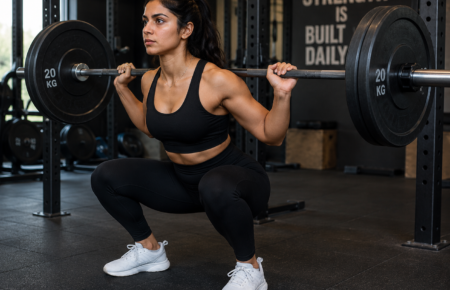
- Barbell Squat: Stand with feet shoulder-width apart. Hold the barbell across the upper back. Squat down to parallel and push back up to stand.
- Barbell Bench Press: Lie on a flat bench with feet on the ground. Grasp the barbell wider than shoulder-width. Lower it to the chest and press back up.
- Barbell Deadlift: Stand with feet hip-width apart. Bend at hips and knees, grip the bar, and lift by extending hips and knees.
Advanced Barbell Movements for Seasoned Lifters
After mastering basic lifts, you can move to more complex ones. These exercises boost strength, coordination, and stability:
- Clean and Jerk: Start with the barbell on the floor, pull it up to shoulders, then push it overhead in one motion.
- Snatch: Lift the barbell from the floor to overhead in one movement, landing wide apart.
| Exercise | Target Muscles | Level |
|---|---|---|
| Barbell Squat | Quadriceps, Hamstrings, Glutes | Beginner |
| Barbell Bench Press | Chest, Shoulders, Triceps | Beginner |
| Barbell Deadlift | Back, Legs, Core | Beginner |
| Clean and Jerk | Full Body | Advanced |
| Snatch | Full Body | Advanced |
Adding these exercises to your routine can greatly improve your strength. Always focus on proper form and technique to avoid injuries and get the most out of your workouts.
Key Barbell Workouts for Strength Gains
To get stronger, it’s key to do the right barbell workouts. Fitness lovers can gain from full-body routines and exercises that target specific muscles. This way, they build muscle all over and boost their strength.
Full-Body Barbell Routines
Full-body barbell routines are great for getting the most out of your workouts. They use big movements that work many muscles at once. Squats, deadlifts, and bench presses are core exercises for barbell strength training.
These exercises help grow muscles and improve body coordination and strength.
Targeting Specific Muscle Groups
It’s also good to focus on certain muscle groups to improve your fitness. Working on the chest, back, and legs can make your body more balanced. Isolation exercises like barbell curls and tricep extensions target specific muscles.
By mixing full-body routines with isolation exercises, you can get the best results in strength and muscle growth.
Favourite Barbell Lifts
The world of barbell lifts is vast, but two exercises are unmatched: the deadlift and the bench press. These lifts show off raw strength and are key for muscle growth and fitness. We’ll explore each lift’s benefits, techniques, and safety tips for the best results.
The Deadlift: A Foundation for Strength
The deadlift is known as the *king of all lifts*. It works many muscles, focusing on the lower body and core. To do it safely and effectively, mastering proper technique is essential. Here are some important points:
- Engagement of major muscle groups: The hamstrings, glutes, and lower back all work in unison during this lift.
- Technique: Feet shoulder-width apart, grip the bar with both hands, and lift with your legs while keeping the back straight.
- Variations: Consider trying sumo deadlifts or Romanian deadlifts for different muscle targeting.
The Bench Press: Building Upper Body Power
The bench press is famous for shaping the upper body, focusing on the chest, shoulders, and triceps. It boosts upper body strength and enhances pushing power for sports and daily tasks. Key points include:
- Targeted muscles: This exercise mainly works the pectoral muscles, with the deltoids and triceps also involved.
- Proper positioning: Lying flat on the bench with feet planted, grip the bar slightly wider than shoulder-width, lowering it gently to your chest before pushing back up.
- Safety tips: Always use a spotter when attempting heavier weights to safeguard against injury.
Effective Barbell Training Tips
Barbell training can be very rewarding if done right. It’s important to focus on proper form to get the best results and avoid injuries. Regular practice and following these barbell training tips will improve your performance.
Proper Form and Technique
Keeping the right form during lifts is key. It helps you get better results and stay safe. Here are some important tips:
- Keep your back straight and core tight during the lift.
- Make sure your hands are in the right spot on the barbell for balance.
- Use a controlled movement, paying extra attention when lowering the weight.
- Use a full range of motion to work your muscles better.
Progressive Overload in Barbell Training
Using progressive overload is important for getting stronger and building muscle. It means slowly adding more weight, doing more reps, or lifting more often. Here are ways to do it:
- Gradually add more weight as you get stronger.
- Shorten rest times between sets to make your workouts harder.
- Try different exercises to work your muscles in new ways.
- Keep track of your progress to stay motivated and on track.
Incorporating Barbell Movements into Your Routine
Adding barbell exercises to your workout routine boosts strength and conditioning. A well-planned schedule balances barbell workouts with other activities. This balance helps muscles grow and recover properly.
By organizing your workouts, you ensure all muscle groups get worked. This approach makes your fitness routine more effective and balanced.
Structuring Your Workout Schedule
Creating a workout plan with barbell exercises is key to success. Here are some tips to help:
- Set Specific Days: Choose certain days for barbell exercises. This prevents them from clashing with other tough workouts.
- Use Variety: Mix different exercises for different muscles in each session. Try deadlifts, squats, and bench presses.
- Plan for Rest: Make sure to include rest days. This lets muscles recover and get stronger, preventing injuries and improving performance.
- Try Periodization: Add phases of intensity to your schedule. This lets your body adapt and grow.

Having a workout plan with barbell routines is a great way to build strength. It also keeps your body healthy. Regularly check and tweak your routine to keep improving and reaching your fitness goals.
Safety Protocols When Using a Barbell
It’s vital to stay safe when using a barbell to avoid injuries and get the most out of your workout. Following safety rules can make your training better. Knowing common mistakes helps keep everyone safe.
Common Mistakes to Avoid
There are several mistakes people make with barbells. Knowing these can help avoid accidents:
- Poor Lifting Technique: Bad form can cause strains or injuries. It’s key to know the mechanics of the lift for safety and results.
- Overloading the Barbell: Trying to lift too much is a common error. It can cause serious harm, showing why picking the right weights is critical.
- Neglecting Environment Setup: Training in a messy or unsafe area raises the risk of accidents. A clean space helps keep movements safe and focused.
- Ignoring Spotters: Having a spotter for heavy lifts adds extra safety. They can help in emergencies, greatly lowering injury risk.
Combining Barbell Exercises with Other Fitness Methods
Mixing different training styles can make workouts more fun and effective. Adding cardio to barbell exercises helps balance strength, endurance, and flexibility. This mix of training styles offers a complete fitness plan.
Integrating Cardio and Flexibility with Barbell Workouts
High-Intensity Interval Training (HIIT) is great when combining barbell exercises with cardio. It alternates intense effort with rest, boosting heart health and strength. This combo burns calories efficiently and improves fitness.
Adding flexibility training to barbell sessions boosts performance and prevents injuries. Stretching or yoga after workouts improves range of motion. This keeps muscles healthy and supports a long-term fitness journey.
Combining barbell exercises, cardio, and flexibility creates a well-rounded fitness plan. It helps build strength, improve endurance, and enhance flexibility. This leads to better performance and overall health.

Tracking Your Progress with Barbell Routines
It’s important to track how well you’re doing during workouts. Barbell routines are great for seeing how strong you’re getting. Having clear goals helps you stay focused and motivated.
Setting Goals for Strength Development
Setting realistic goals is key for getting stronger. Goals should be specific, measurable, achievable, relevant, and time-bound (SMART). Keeping a workout log helps you see how you’re improving and what you need to work on.
Here are some tips for setting goals:
- Define clear targets: Know exactly what you want to achieve.
- Use weight increments: Increase the weight you lift to keep getting stronger.
- Track performance metrics: Record the weights, reps, and sets you do.
- Set a timeline: Decide when you want to reach your goals for better focus.
Checking in on your workouts and progress helps you stay on track. Here’s a way to keep track of your strength over time:
| Month | Exercise | Weight Lifted (lbs) | Repetitions |
|---|---|---|---|
| January | Bench Press | 135 | 8 |
| February | Bench Press | 145 | 8 |
| March | Bench Press | 150 | 7 |
| April | Deadlift | 185 | 6 |
This method shows your progress clearly. It helps you reach your strength goals. Keeping track of your progress boosts your motivation and helps improve your workouts.
Conclusion
Barbell workouts are key for building muscle and boosting fitness. They help target major muscle groups, leading to strength gains. Barbell training fits all fitness levels, helping both newbies and pros.
Learning proper form and increasing weight slowly are vital. This approach helps in successful strength training. It shows that everyone’s progress is different, but small steps lead to big results.
This article aims to help readers use barbell workouts in their routines. With dedication and motivation, they can reach new heights in strength. Barbell exercises can truly transform one’s fitness journey.
FAQ
What are the best exercises with a barbell for beginners?
Beginners should start with the barbell squat, bench press, and deadlift. These exercises build core strength and teach proper technique. They are the foundation for more advanced workouts.
How often should one perform barbell workouts for muscle gain?
For muscle gain, aim for 3 to 4 barbell workouts a week. This schedule allows for enough recovery and maximizes strength training benefits.
What are the primary benefits of barbell training?
Barbell training boosts muscle mass and metabolic rate. It also improves bone density and functional strength. These benefits enhance daily activities and overall fitness.
How does one ensure proper form when performing barbell exercises?
Focus on body alignment and a neutral spine. Engage your core during the exercise. Working with a certified trainer can also help ensure safe techniques.
What should someone know about progressive overload in barbell training?
Progressive overload means gradually increasing weights or intensity. This stimulates muscle growth and strength. Tracking progress and adjusting weights is key.
Are there specific barbell routines for targeting muscle groups?
Yes, routines can target specific muscle groups. For example, squats and lunges work the lower body. Bench presses and rows target the upper body. A mix of compound and isolation movements is essential.
How can barbell exercises be combined with cardio and flexibility training?
Combine barbell exercises with cardio and flexibility through interval or circuit training. High-Intensity Interval Training (HIIT) with barbell workouts boosts strength and cardiovascular health.
What safety protocols should one follow when using a barbell?
Always ensure a secure grip and use appropriate weights. Set up the workout area safely to prevent accidents. Avoid overloading the barbell and use a spotter for heavier lifts.
How can progress be tracked effectively with barbell routines?
Track progress by setting measurable goals and recording workout details. Assess strength improvements over time. Regularly adjust training goals to stay motivated and continue growing.






No Comment! Be the first one.