




How to Do Bent Over Barbell Curl for Better Arm Gains im 2026
Learn the proper technique for the bent over barbell curl to enhance your arm workouts and achieve better muscle definition with our how-to guide.


Could one precise change in stance unlock bigger, sharper biceps for the gym-goer in Toronto or Vancouver?
Table Of Content
- Key Takeaways
- Understanding the Bent Over Barbell Curl
- Anatomical Benefits and Muscle Engagement
- Primary Muscle Groups
- Long-Term Health Advantages
- Mastering the Bent Over Barbell Curl Technique
- Essential Tips for Optimal Form
- Maintaining a Neutral Spine
- Controlling the Tempo
- Avoiding Ego Lifting
- Integrating Variations into Your Training
- Utilizing Different Grip Attachments
- Conclusion
- FAQ
- What is the proper starting position for the bent over barbell curl?
- Which muscles does this movement target?
- How much weight should someone use?
- How many reps and sets produce the best arm gains?
- How should the tempo be controlled during the exercise?
- What are common form mistakes to avoid?
- How can someone maintain a neutral spine during the movement?
- Are there useful variations to include in workouts?
- Can people with lower back issues perform this exercise?
- How does grip width affect the movement?
- How important is elbow position during the lift?
- When should someone progress weight or change variations?
- How do rest and recovery influence results?
- What warm-up is recommended before performing this exercise?
- Can beginners include this movement in their first programs?
The bent-over barbell curl is a focused exercise that helps isolate the biceps while the body stays steady. Celebrity PT Scott Laidler stresses that proper form is essential to maximize muscle engagement during any bent-over barbell movement.
When done right, this variation puts the load on the arms and limits cheating from the back. Keep knees slightly bent and hips locked to build a stable base for the lift. Attention to shoulder and elbow alignment makes the weight move in the correct plane and protects the back.
Whether someone trains for aesthetics or strength, this technique adds time under tension and helps arms respond faster than many standard approaches.
Key Takeaways
- Proper form is vital to isolate biceps and protect the back.
- Maintain slight knee flex and locked hips for a stable position.
- Focus on elbow and shoulder alignment through each rep.
- Consistency and controlled reps increase muscle time under tension.
- Variations of this move challenge arms more than common workouts.
Understanding the Bent Over Barbell Curl
This angle of the curl alters the resistance curve, making each rep more demanding for the biceps while the torso stays stable.
Mechanics matter: the position forces the elbows to remain fixed so the arms provide the primary movement. That makes the exercise a useful choice in many gym training plans.
The Gym Professor exercise index notes this variation is rising in popularity among Mixed Martial Arts athletes. They use it for sport-specific strength because the body works against gravity in a different way than standard workouts.
Keeping the knees slightly bent stabilizes the hips and protects the back. When the hips are steady, the bar moves in a path that maximizes muscle activation and time under tension.
The bar provides constant resistance, so repeated reps train the body to handle more weight and improve functional fitness for people in Canada and beyond.
- Top benefit: isolates biceps while keeping the back static.
- Ideal for athletes adding variety to weekly workouts.
Anatomical Benefits and Muscle Engagement
When the body stays fixed in a forward-lean position, the arms and supporting back muscles must do more work. This exercise shifts load to the biceps while forcing stabilizers to hold a strict shape.
Primary Muscle Groups
Primary movers: the biceps take the main load as the elbows stay tucked. The back muscles—especially the lower back—act as stabilizers to keep the torso rigid.
Hips and knees must be set to protect the spine and let the arms perform clean reps.
Long-Term Health Advantages
Consistent resistance training improves bone density and long-term fitness. Research shows it is the top method for bone health over ten years.
“Resistance work protects joints and builds the strength needed for daily and athletic tasks.”
- Targets biceps and supporting back muscles for better arm definition.
- Builds lower back strength by holding a fixed position throughout reps.
- Recommended weekly volume: 10–20 sets for steady gains; higher volumes give faster hypertrophy.
| Benefit | How it works | Practical tip |
|---|---|---|
| Muscle isolation | Elbows remain fixed so arms drive the movement | Keep elbows tucked and control tempo |
| Spinal support | Lower back stabilizes the torso under weight | Set hips and knees to protect the spine |
| Bone health | Resistance training increases density over time | Progress load slowly across workouts |
Mastering the Bent Over Barbell Curl Technique
This technique places the focus squarely on the biceps by limiting body momentum and enforcing strict form.
Starting position: stand with a grip slightly wider than shoulder width and knees slightly bent. Hinge at the hips and keep the back neutral so the bar sits close to the floor before you begin the movement.
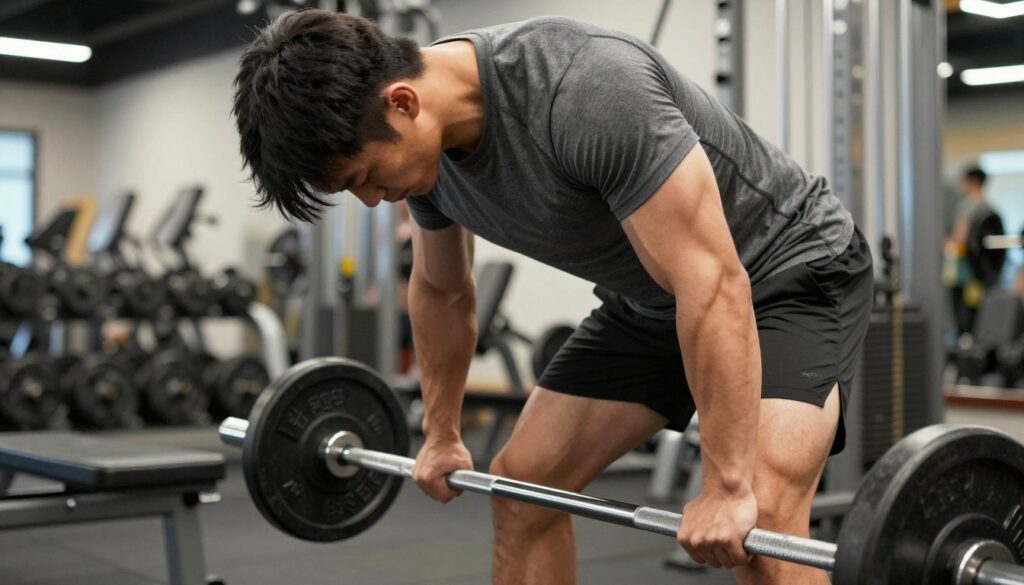
- Use a straight bar and a firm grip; avoid swinging the body to move the weight.
- Lock the elbows to the sides so the arm muscles perform the reps, not the shoulder or back.
- If form breaks, reduce weight — many people try to lift much weight and lose control.
“Pick a weight you can lift slowly; use a 3-second tempo for both the upward and downward phases.” — Scott Laidler
Beginner benchmarks: a reasonable starting standard is about 38 lb for men and 14 lb for women. Progress by perfecting the movement before increasing weights.
Mastering the technique keeps the back safe, makes each rep count, and lets people in Canada and elsewhere build arm strength steadily with well-controlled workouts.
Essential Tips for Optimal Form
Small technical choices during each rep decide whether the arms get stronger or the lower back takes the hit. These cues help keep the starting position steady and protect the spine while maximizing muscle work.

Maintaining a Neutral Spine
Maintaining a neutral spine is the top priority for protecting the lower back during this barbell exercise.
Scott Laidler recommends pushing the hips back rather than folding at the waist. That hip hinge keeps the body aligned and places load on the intended muscles.
Controlling the Tempo
Control the movement with a steady tempo. Aim for a 3-second count on the way up and three seconds down.
This time under tension improves muscle response and reduces reliance on momentum from the back or hips.
Avoiding Ego Lifting
Choose a weight that lets the athlete keep perfect form. A lighter load with clean reps builds strength better than heavy sets with poor technique.
If the lower back starts to strain, check knees slightly and your grip at shoulder width. Adjust weight rather than posture.
“Focus on resistance and repeatable cues so every rep trains the right muscles safely.”
- Grip: firm, hands at shoulder width to balance the bar.
- Reps: every rep should match the same tempo and focus.
- Support: use hips and knees slightly bent to protect the back and floor contact.
| Tip | Why it matters | Quick fix |
|---|---|---|
| Neutral spine | Protects lower back and keeps load on arms | Push hips back; keep chest up |
| Controlled tempo | Increases muscle time under tension | Use a 3s up / 3s down count |
| Appropriate weight | Prevents form breakdown and injury | Lower the weight if form fails |
Integrating Variations into Your Training
Small changes in grip or attachment can rewrite which muscles take the lead during each rep.
Using different handles and bars lets athletes hit the back and arms from new angles. The Gym Professor exercise index recommends Globe Gripz to shift the resistance profile and boost grip strength during barbell training.
Try alternating a straight bar with specialty grips across workouts. You can use a dumbbell or a barbell depending on what the gym has available.
Utilizing Different Grip Attachments
Changing grip alters how resistance travels through the body. That forces muscles to adapt, improving strength and control.
- Swap grips to break plateaus and refresh workouts.
- If you struggle to move much weight, a neutral or thicker grip can improve activation.
- Always set hips and knees correctly before you lift to protect the floor contact and spine.
“Varying grip and attachment keeps the nervous system guessing and speeds progress.”
| Variation | Effect | When to use |
|---|---|---|
| Straight bar | Balanced resistance for classic strength work | Foundational training days |
| Globe Gripz | Thicker handle increases grip demand and alters resistance | To boost grip and overcome plateaus |
| Dumbbell neutral grip | Improves unilateral control and reduces shoulder strain | If one side lags or form breaks |
Conclusion
This exercise rewards strict position and tempo with real biceps and back gains. When they keep hips set and control the weight, athletes protect the spine and make each rep count.
Start light and focus on form. Prioritizing technique over heavy loads reduces injury risk and speeds long-term progress in the gym and in training plans across Canada.
Use sensible variations to keep workouts fresh. Consistency, measured increases in weight, and attention to muscle activation deliver the best results for arm development.
FAQ
What is the proper starting position for the bent over barbell curl?
Which muscles does this movement target?
How much weight should someone use?
How many reps and sets produce the best arm gains?
How should the tempo be controlled during the exercise?
What are common form mistakes to avoid?
How can someone maintain a neutral spine during the movement?
Are there useful variations to include in workouts?
Can people with lower back issues perform this exercise?
How does grip width affect the movement?
How important is elbow position during the lift?
When should someone progress weight or change variations?
How do rest and recovery influence results?
What warm-up is recommended before performing this exercise?
Can beginners include this movement in their first programs?









No Comment! Be the first one.